Malik Abdul Jabbar
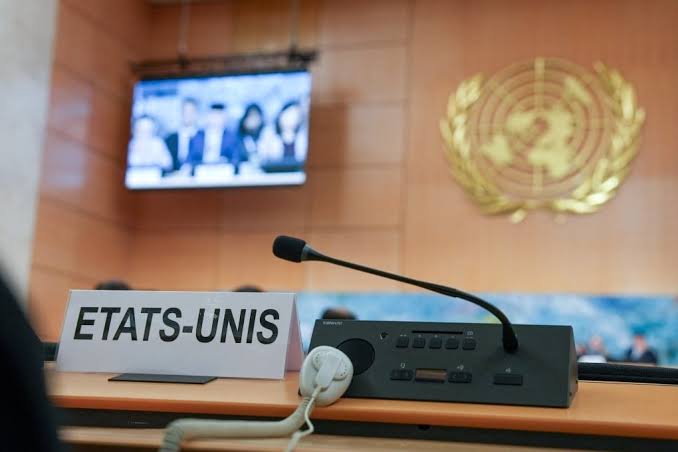
Geneva(newsviews) The United States boycotted on Tuesday a United Nations review of its human rights record for a second time, in an unprecedented snub of a process that all countries traditionally submit to. US seats were left empty at the world body’s European headquarters in Geneva for the so-called Universal Periodic Review (UPR), which all 193 UN member states undergo every four to five years.
As the review was set to begin, UN Human Rights Council president Sidharto Reza Suryodipuro, of Indonesia, looked at the empty seats behind the US nameplate and said that “the delegation of the United States is not present in the room”.
The US absence was not a surprise. President Donald Trump’s administration decided shortly after his return to power in January 2025 to halt cooperation with the rights council, and had already boycotted the UPR process last November.
In response, the council at the time had postponed the US review for a year, in the hope that Washington would return. The US State Department said this week that the administration considers the council an “irredeemable body” that “makes a mockery of human rights”, suggesting that it would not participate in any of its mechanisms, including the UPR.
‘Accountability is important’
Despite the continued boycott, rights advocates, civil society organisations and US elected officials have gathered in Geneva this week to keep a spotlight on alleged US rights abuses. Among them was Noor Abdalla, the wife of Mahmoud Khalil, the prominent pro-Palestinian protest leader and green card holder whom the Trump administration sought to deport last year. “Accountability is important,” she told reporters.
“When the most powerful government in the world is not held accountable, they think that they can do whatever they want to do… We saw that with my husband’s case.” Washington’s complete non-compliance with the process is unprecedented. Before the United States, only Israel had previously boycotted its UPR, in early 2013, although it underwent a delayed review later that year. Some countries have sought postponements since the UPR process began in 2008, while Nicaragua partially boycotted the process, but only after its latest review had already taken place.
‘Hypocrisy’
Several diplomats spoke up on Tuesday about the value of the UPR, with the European Union representative saying Brussels “regrets any situation in which full engagement… does not occur, including the decision by the United States again not to participate”. Cuban ambassador Rodolfo Benitez Verson voiced outrage at Washington’s absence.
“The United States is the only country in the history of the Human Rights Council which has refused to take part in the UPR cycle without even presenting its national report,” he told the council, slamming US “double standards and hypocrisy”.