Malik Abdul Jabbar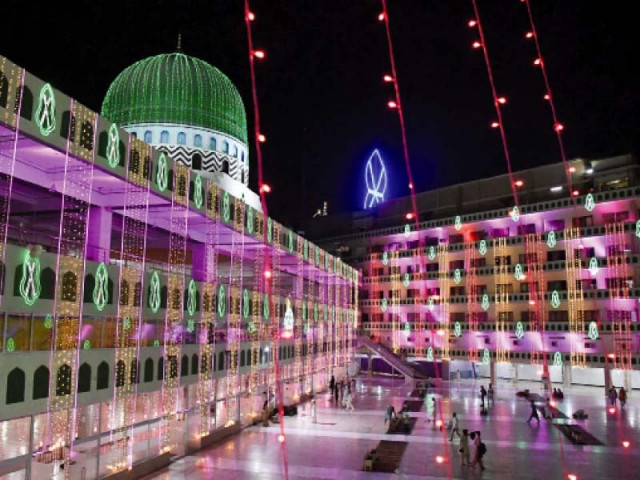
Citizens to celebrate the birth of the Holy Prophet (PBUH) across Pakistan
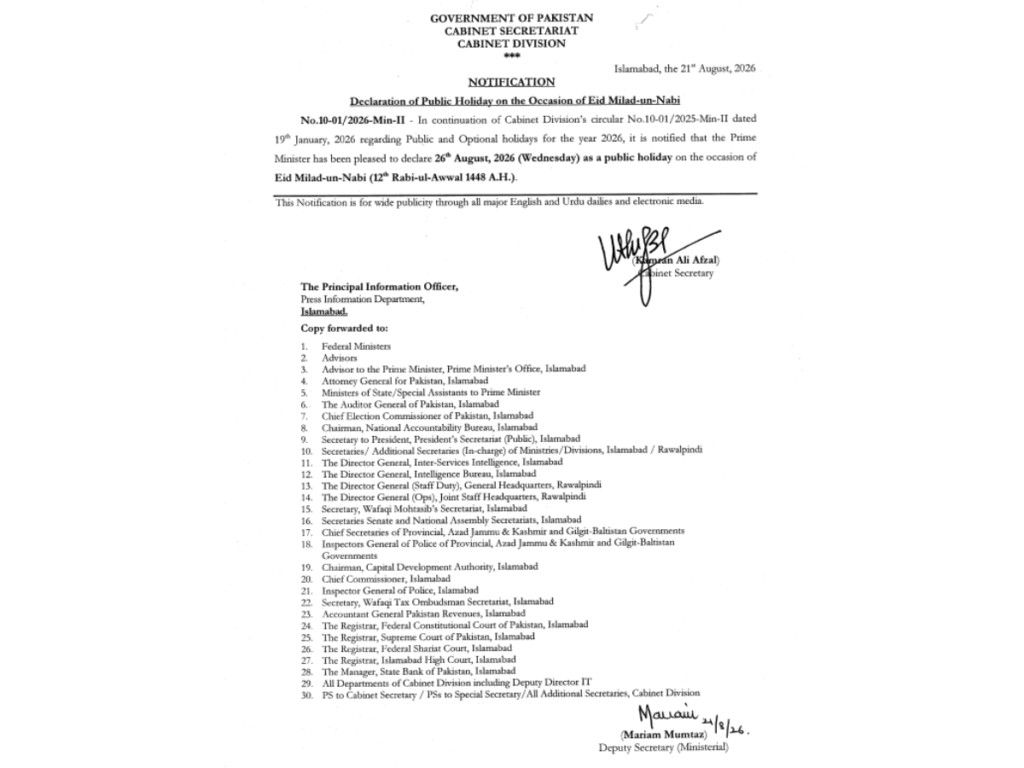
The government has declared August 26, 2026 (Wednesday), as a public holiday on the occasion of Eid Miladun Nabi, according to a notification issued by the Cabinet Division on Friday.
The notification said the decision was taken in continuation of the Cabinet Division’s circular regarding public and optional holidays for 2026.
“It is notified that the prime minister has been pleased to declare August 26, 2026 (Wednesday) as a public holiday on the occasion of Eid Miladun Nabi (12th Rabiul Awwal 1448 AH),” the notification said.
Sindh Government also declared August 26, 2026 (Wednesday), as a public holiday across the province on the occasion of Eid Miladun Nabi, according to a notification issued by the Sindh Services, General Administration and Coordination Department.
The notification, issued in pursuance of the Cabinet Division’s notification dated August 21, said the public holiday would apply “throughout the Province of Sindh” for all government offices, autonomous bodies, semi-autonomous bodies, corporations and local councils under the administrative control of the provincial government.
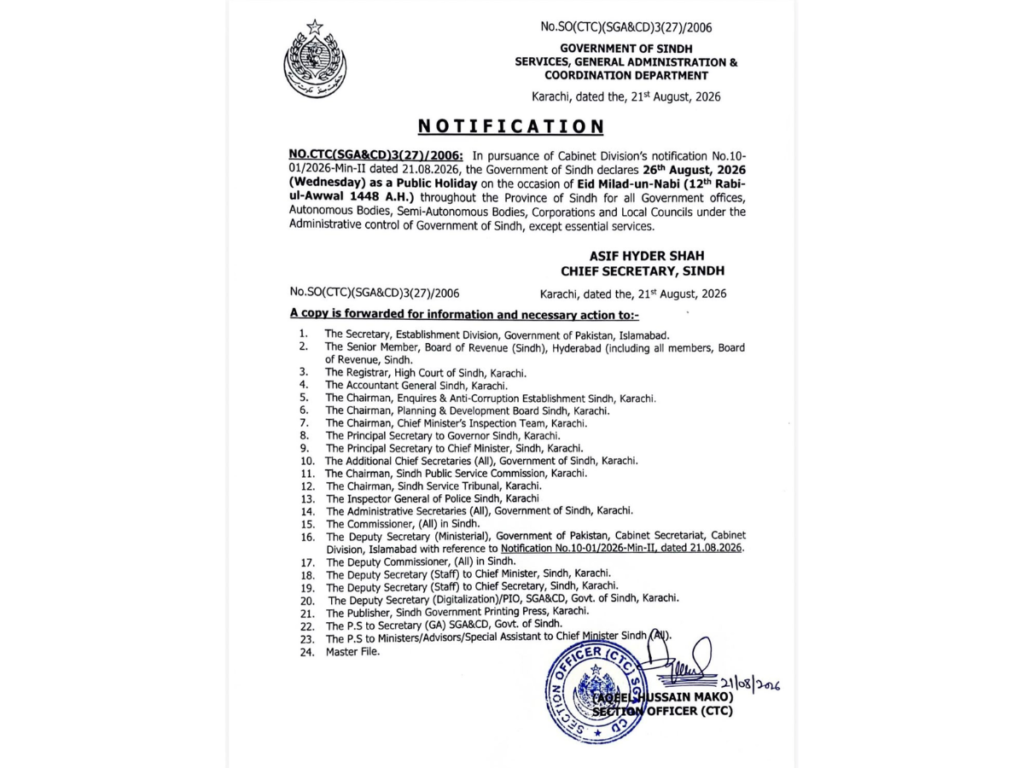
However, the holiday will not apply to essential services, according to the notification.
Muslims around the world celebrate the birth of the Holy Prophet (PBUH), locally known as Eid Miladun Nabi, on the 12th of Rabiul Awwal.
Read: Govt announces public and optional holidays for 2026
Major Islamic festivals are scheduled as follows, though the government noted these dates are subject to the appearance of the moon:
- Eidul Fitr: March 21, 22, and 23.
- Eidul Azha: May 27, 28, and 29.
- Ashura (9th and 10th Muharram): June 24 and 25.
- Eid Miladun Nabi: August 25.
The circular also identifies specific bank holidays on January 1, July 1, and February 18 (the latter for Zakat deduction). While banks will remain closed to the public on these dates, they will stay open for employees.
Under the 2026 regulations, government servants are restricted in the number of optional holidays they may claim. Muslim employees are entitled to one optional holiday per year, while non-Muslim employees may take up to three. These are granted at the discretion of the Head of the Organisation, ensuring that essential work continues without dislocation.
Exporters and export manufacturers are granted an exemption from these holidays, provided they compensate their staff with overtime pay in addition to regular wages.
Source: Express Tribune